

COVENANT LABS · LAB OUTPUT
Model Encryption Protocol
Only what is meant should be seen.
- TYPE
- PROTOCOL
- STATUS
- PUBLISHED
- VERSION
- 2.6
- DATE
- JULY 2026
- CODENAME
- CHINCHILLA
MEP runs end-to-end encrypted inference on standard cloud hardware with less than five percent overhead. Model weights and user data stay ciphered outside the trust boundary, so the host that serves the model never has to be trusted with it. Privacy is enforced by the mathematics, not by the provider's policy.
PROPERTIES
| PRIMITIVE | Structure-preserving weight permutation |
|---|---|
| THREAT MODEL | Untrusted cloud host; model IP and I/O protected |
| OVERHEAD | < 5% vs. plaintext inference |
| SCALE PROVEN | LLaMA-class models to 70B parameters |
| INFRASTRUCTURE | Standard cloud GPUs, no secure enclave required |
| RUNTIME | vLLM integration |
| INTERFACE | OpenAI-compatible API |
| AVAILABILITY | Private enterprise deployments, dedicated hardware |
1.0The problem
Every serious approach to private AI inference has forced a trade nobody should accept: cryptographic guarantees at unusable speed, usable speed inside somebody else's hardware, or promises on paper with no mathematics behind them.
| APPROACH | BASIS | FAILURE |
|---|---|---|
| Homomorphic encryption | Cryptographic | 100–1000x inference slowdown |
| Secure enclaves | Hardware | Vendor lock-in; memory limits near 312MB |
| Policy-based privacy | Contractual | Soft trust; policies change overnight |
2.0Method
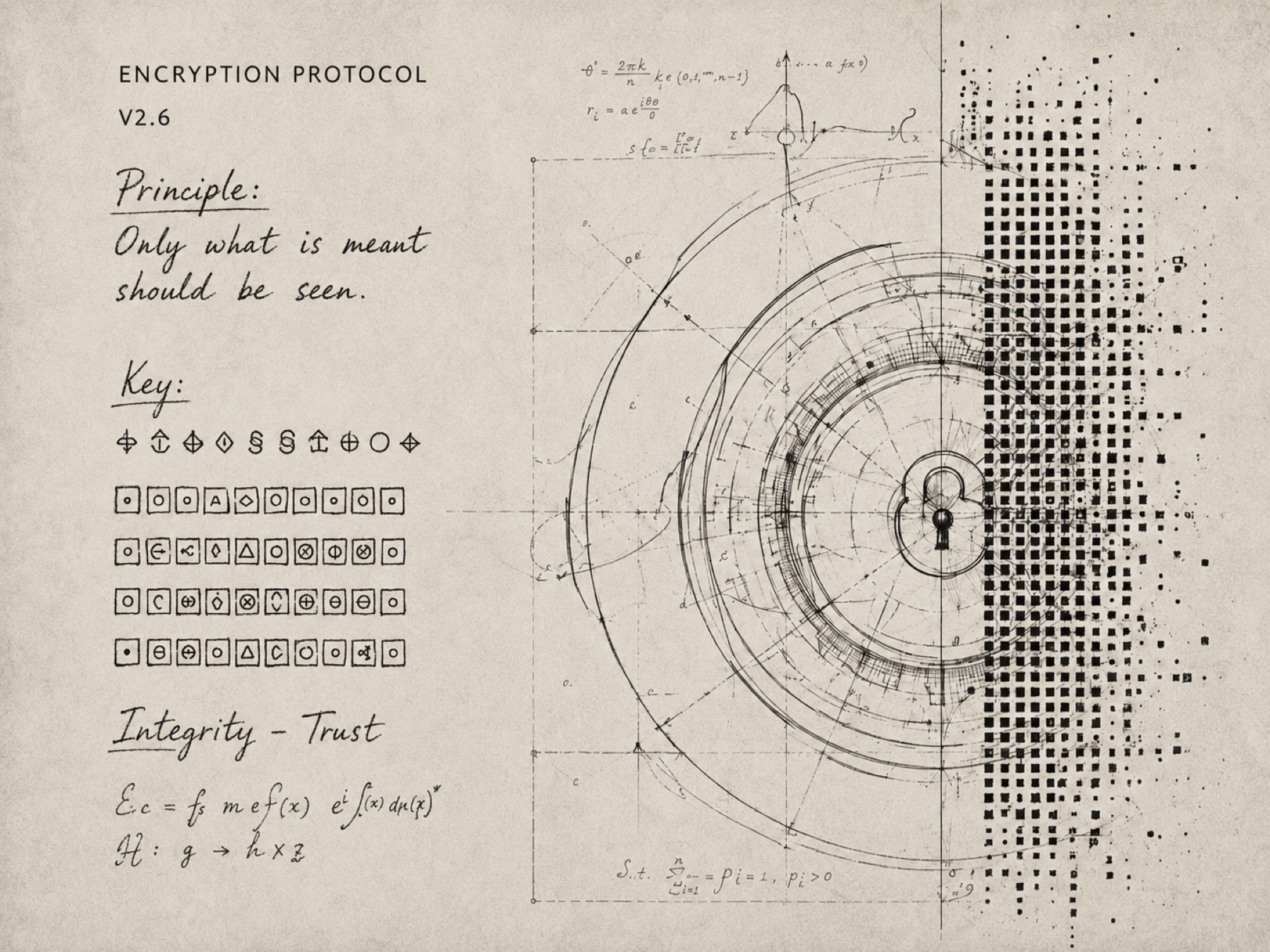
MEP applies a secret structure-preserving permutation to the model's weights before they ever leave the owner's custody. The permuted model computes the same function, but its weights, activations, and token stream are meaningless to the host. The permutation and its inverse live only at the trust boundary.
3.0Validation
- 3.1Integrated with vLLM; serves through OpenAI-compatible endpoints.
- 3.2Benchmarked on LLaMA-class models to 70B parameters at under 5% overhead.
- 3.3Deployed for private enterprise inference on dedicated hardware.
4.0Position
Homomorphic encryption pays for its guarantees in three orders of magnitude of compute. Enclaves pay in hardware freedom. MEP pays under five percent and runs anywhere. That is the difference between privacy as a research demo and privacy as infrastructure.
PROVENANCE
| R1 | Protocol developed and validated internally | 2026 |
| R2 | Published as Output 001 | 2026 |
| R3 | This edition, document v2.6 | 07.2026 |
CITE
@techreport{covenant2026mep,
  title     = {Model Encryption Protocol: Encrypted Inference
               at Native Speed},
  author    = {Covenant Labs},
  year      = {2026},
  number    = {Output 001},
  url       = {https://covenantlabs.ai/research/output-001}
}