
COVENANT LABS · THE KERNEL
You are deep in the lab now.
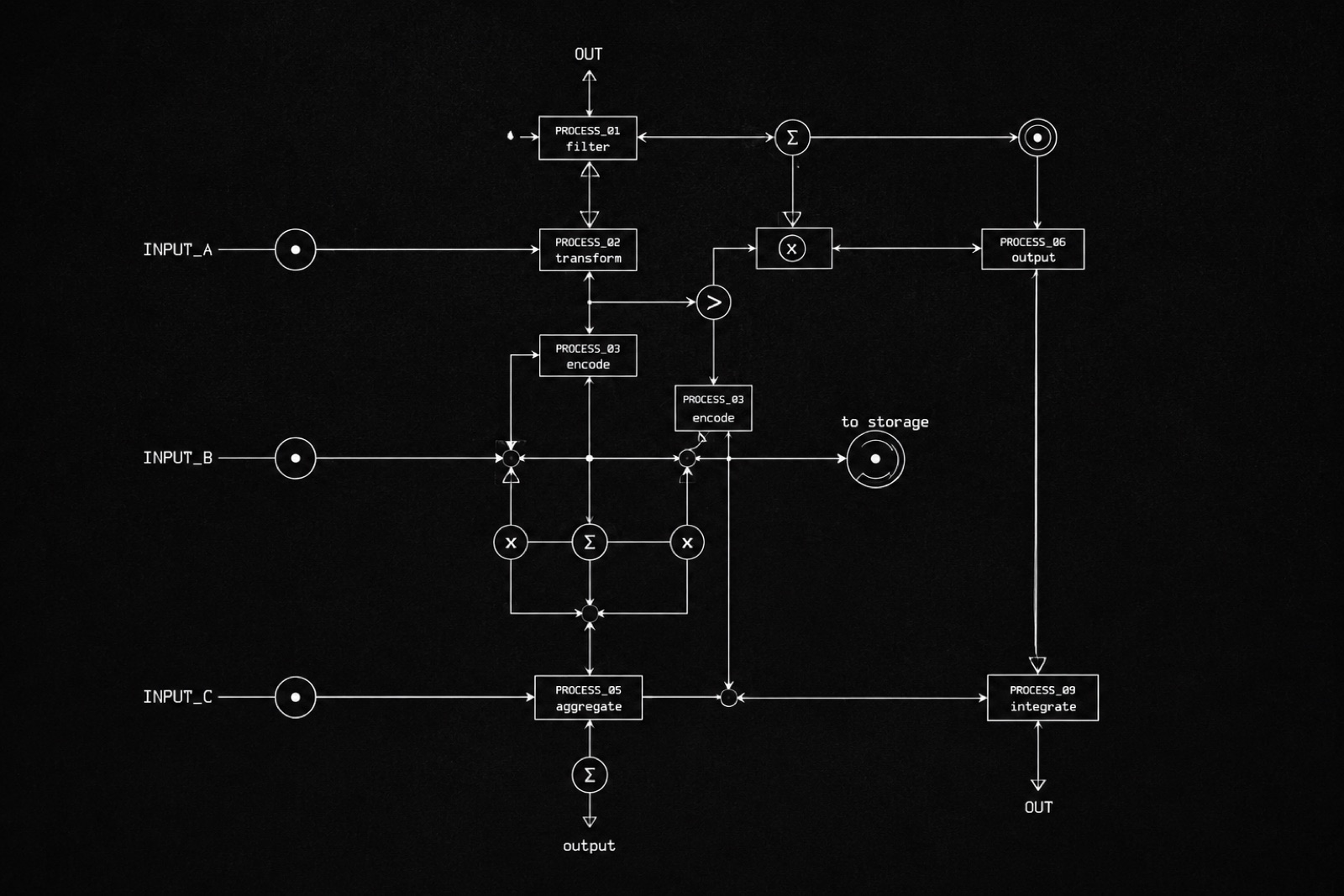
This is the technical foundation for Covenant's sovereign AI infrastructure. Most of the bench is the operating system stack: a deployment couples the graph interface (where conversation, context, and memory live as one branchable graph) with NOD3, the execution engine, running on the Conduit infrastructure framework. Execution is typed and compiled rather than driven by free-form tool calls, memory is an explicit graph rather than a window that fills and degrades, and every tenant holds the keys to its own environment. The rest is the lab's branching innovations, which feed everything else.
I · CORE
The two components every Alfred deployment couples into one machine.
- K.01The graph interface
The graph-based interface, memory included. Conversation, context, and memory as one explicit, branchable graph the user owns.
- K.02NOD3
The execution engine. Typed, signed, composable actions, planned before they run. No free-form tool calls inside the boundary.
II · SECURITY & ENCRYPTION
- K.03Model Encryption ProtocolOUTPUT 001
Cryptographic inference through structure-preserving transforms. The host computes; the host learns nothing.
- K.04The security model
Signed action registration and NOD3-verified invocation. A clean trust boundary between the engine core and the action surface.
III · BRANCHING INNOVATIONS
- K.05ConduitOUTPUT 003
Open-source infrastructure framework. The same code runs on any provider; sovereignty stays with the owner.
- K.06Model Data Language
Type-safe model programming. Language models become structured, validated interfaces.
- K.07LM Lite
Multi-model batching engine. More models per GPU, without giving up isolation.